

Bridgman - Stockbarger & Vertical Gradient Freeze
AI-driven control of the temperature gradient through the freeze, including high-pressure VGF for indium phosphide. Our primary area of competence.
Auxeinby Bucket LabsA digital twin of your furnace.
Built from its geometry and thermal behaviour and corrected against your real growth data, so a recipe change can be tried in simulation before it costs a furnace run.
We get there furnace by furnace, in the plant, with your engineers. Every hot zone we work on teaches the models something no off-the-shelf tool could know yet, and that is what the product is being built out of.
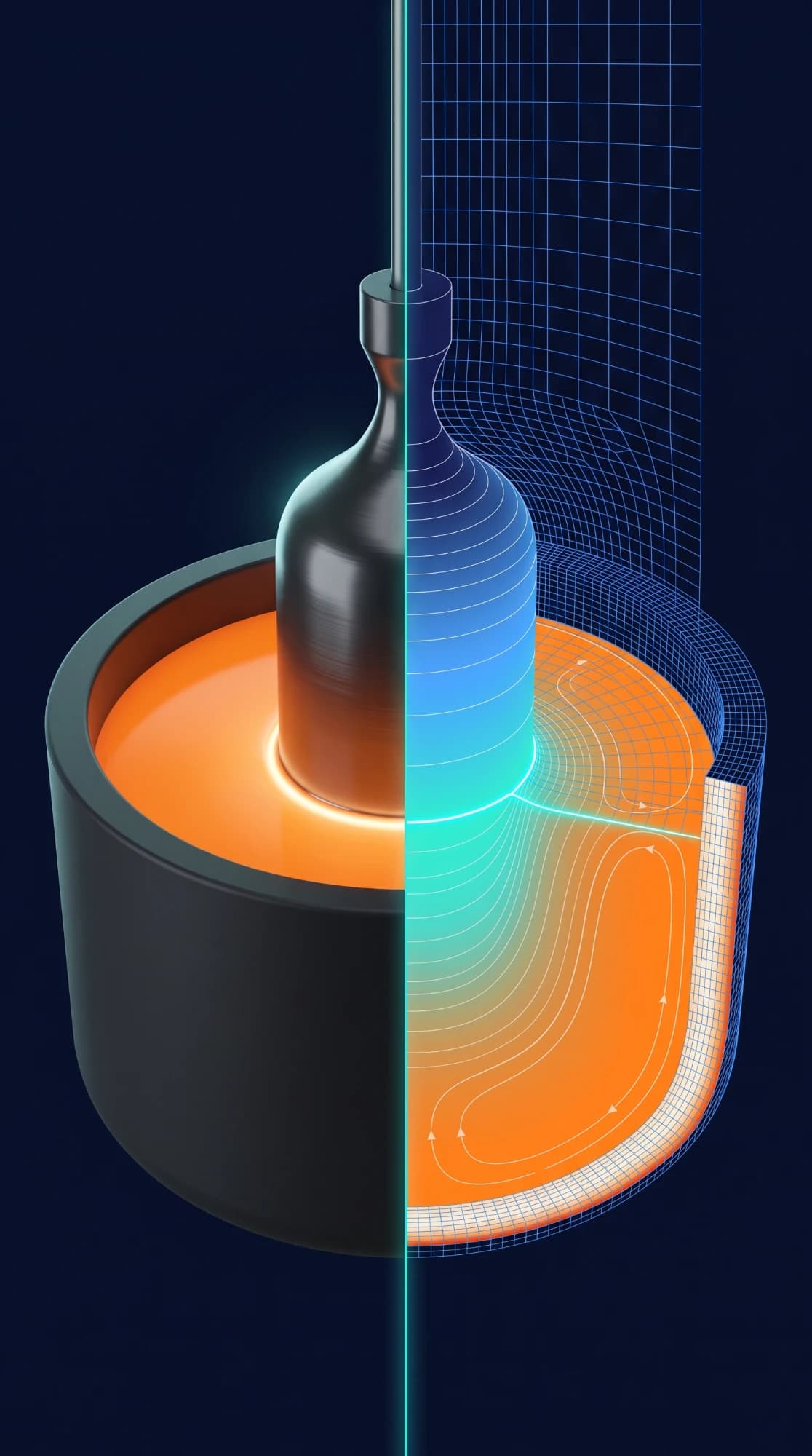
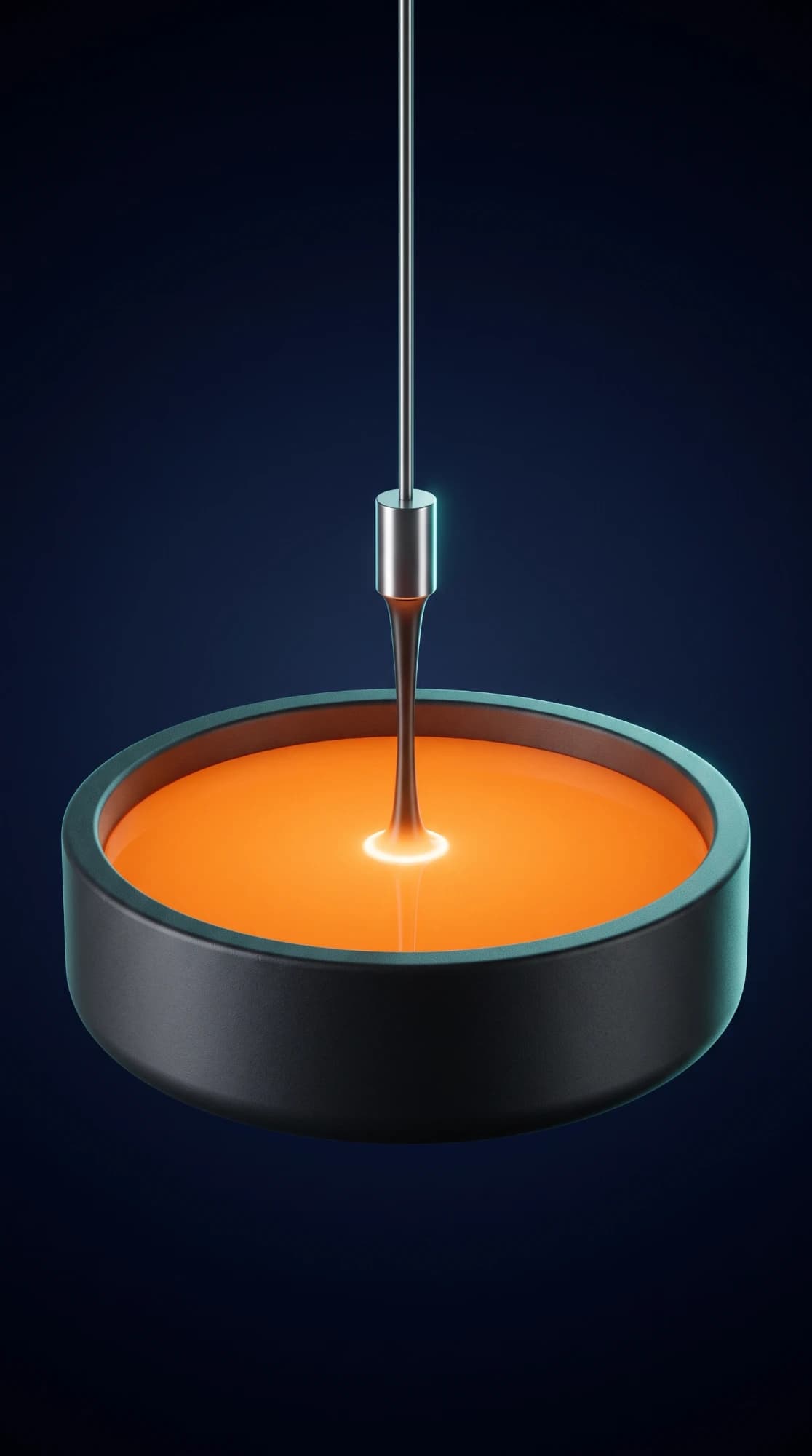
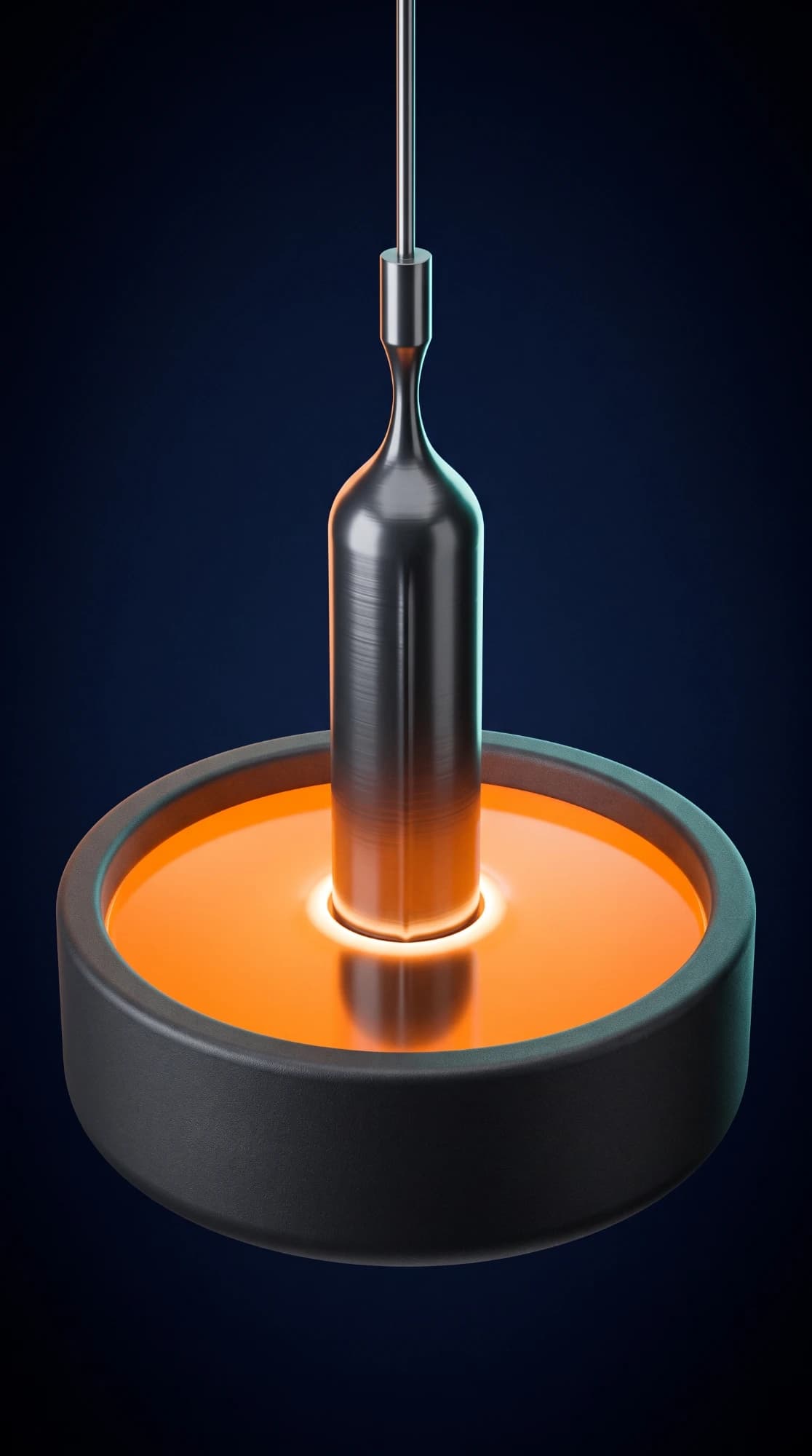
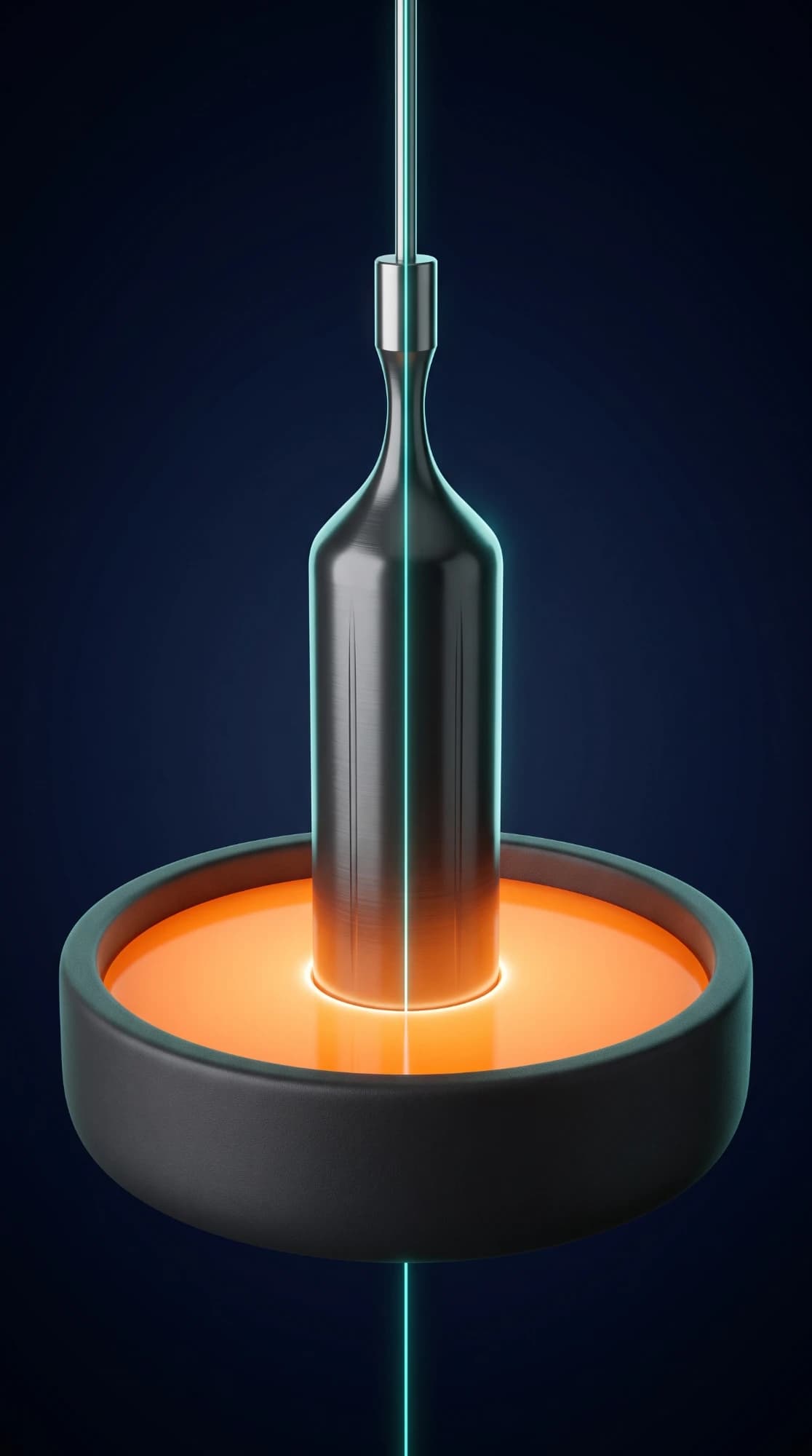
Every chip begins as a single crystal. Before a transistor is patterned, before a wafer is cut, there is one continuous lattice of atoms grown from a melt. It is grown atom by atom, over months. A seed is lowered into molten material and withdrawn slowly enough that the melt freezes onto it in perfect order. A disruption in that order can cost the whole boule. Temperature gradient, rotation, withdrawal rate. The variables interact, the run takes months, and you learn the result at the end. We help you get it right in simulation first. Auxein gives your team a digital twin of your furnace to test process changes before you commit a run. You grow the crystal. We help you grow it better.
In crystal growth you cannot wait for data. A run takes weeks to months. The failure modes you most want to predict are rare by design, because the process has already been tuned to avoid them. A facility with twenty years of history may still have only a few hundred runs on record, and the useful labels are thinner than that.
Learning from observation alone does not work at that sample size. So we invert the order. We build the simulation first and use real runs to correct it.
We start from the furnace itself. Hot zone geometry, heater configuration, insulation, crucible dimensions, material properties. That gives a thermal model of your furnace that produces sensible answers on day one, before it has seen a single one of your runs.
The twin can be run thousands of times across the parameter ranges you care about. Gradient, rotation, withdrawal rate, power profile. That generated set is large enough and varied enough to train a model, including regions of the parameter space you would never deliberately enter on real hardware.
Your furnace does not behave exactly like its model. As real runs accumulate, we use them to correct the twin and the model trained on it. Each run moves the simulation closer to your specific hardware. Ten runs are useful here, because they are correcting a model that already works rather than teaching one from nothing.
Once the twin tracks your process, you can ask it questions. What happens to the gradient if we change this heater ratio. Where does this profile put the interface shape. You get an answer in hours instead of committing months of furnace time to find out.
AI-driven control of the temperature gradient through the freeze, including high-pressure VGF for indium phosphide. Our primary area of competence.
Machine learning models that help calibrate rotation and withdrawal rates for higher single-crystal yield.
Predictive temperature control for the production of large-format optical semiconductor materials.